How sharks are tagged and tracked
Photos can tell us which sixgill came back. Tags tell us where it went in between.
Acoustic tags
An acoustic tag is a small transmitter, usually placed inside the shark by a veterinarian or trained researcher. Every so often it sends a short burst of high-pitched pings that encodes its own ID number.
Receivers moored on the seafloor listen for those pings. Each one logs the tag ID, date and time whenever a tagged shark swims within range, often a few hundred metres. Researchers retrieve the receivers, or query them from a boat, to collect the detections.
One receiver tells you a shark was nearby. A line of them across a channel tells you when it passed through. A tight grid, with each receiver's clock synchronised, lets researchers compare when the same ping reached three or more receivers and work out the shark's position, much like GPS in reverse. Where the receivers go decides what questions the data can answer, so placing them is a big part of the work.
Acoustic tags last for years, so they're good at long-term questions: how long a shark stays, which sites it visits, and when it leaves. Receivers from different projects hear each other's tags, so a sixgill tagged in Puget Sound can turn up on another team's array. Earlier acoustic work in Puget Sound found sixgills spend days deeper and nights shallower, and shift between a few areas with the seasons. See the movement papers.
That work is under way again. In the Seattle Aquarium's sixgill research collaboration with WDFW, the Big Fish Lab and Point Defiance Zoo & Aquarium, a veterinarian implants acoustic transmitters in some of the sixgills the team samples, and every shark gets a numbered Floy tag (below).
What tags look like
Acoustic tags are hard to spot once they're inside a shark. These are the tags and gear you might see in Puget Sound. Click a photo to enlarge it.

Floy tag
The tag you're most likely to see on a dive. A short plastic streamer anchored at the base of the dorsal fin, printed with a large number so divers can read it on video. The Seattle Aquarium's sixgill project puts one on every sixgill it samples. If you see one, film the number and report it.
Photo: Seattle Aquarium
Acoustic receiver
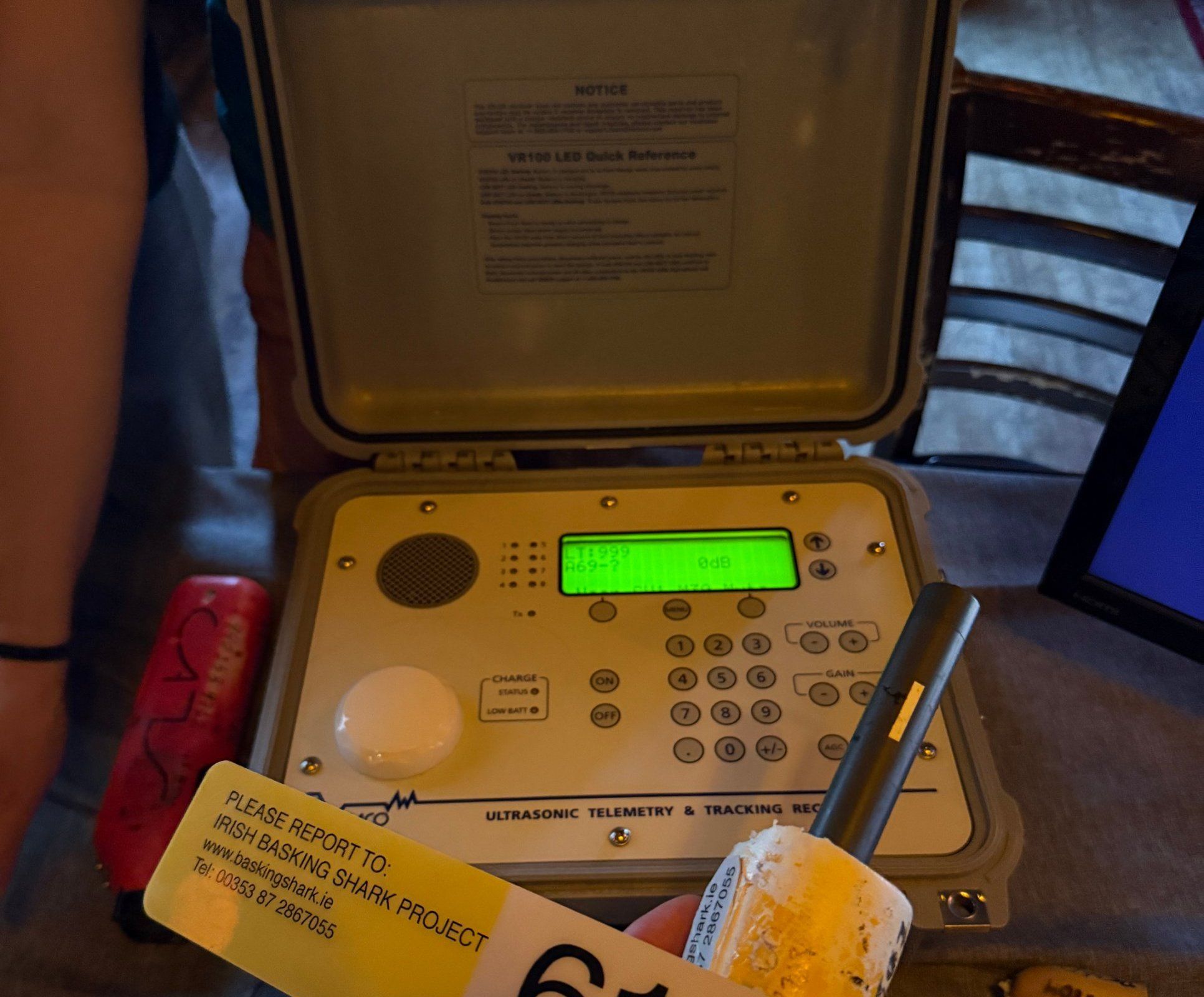
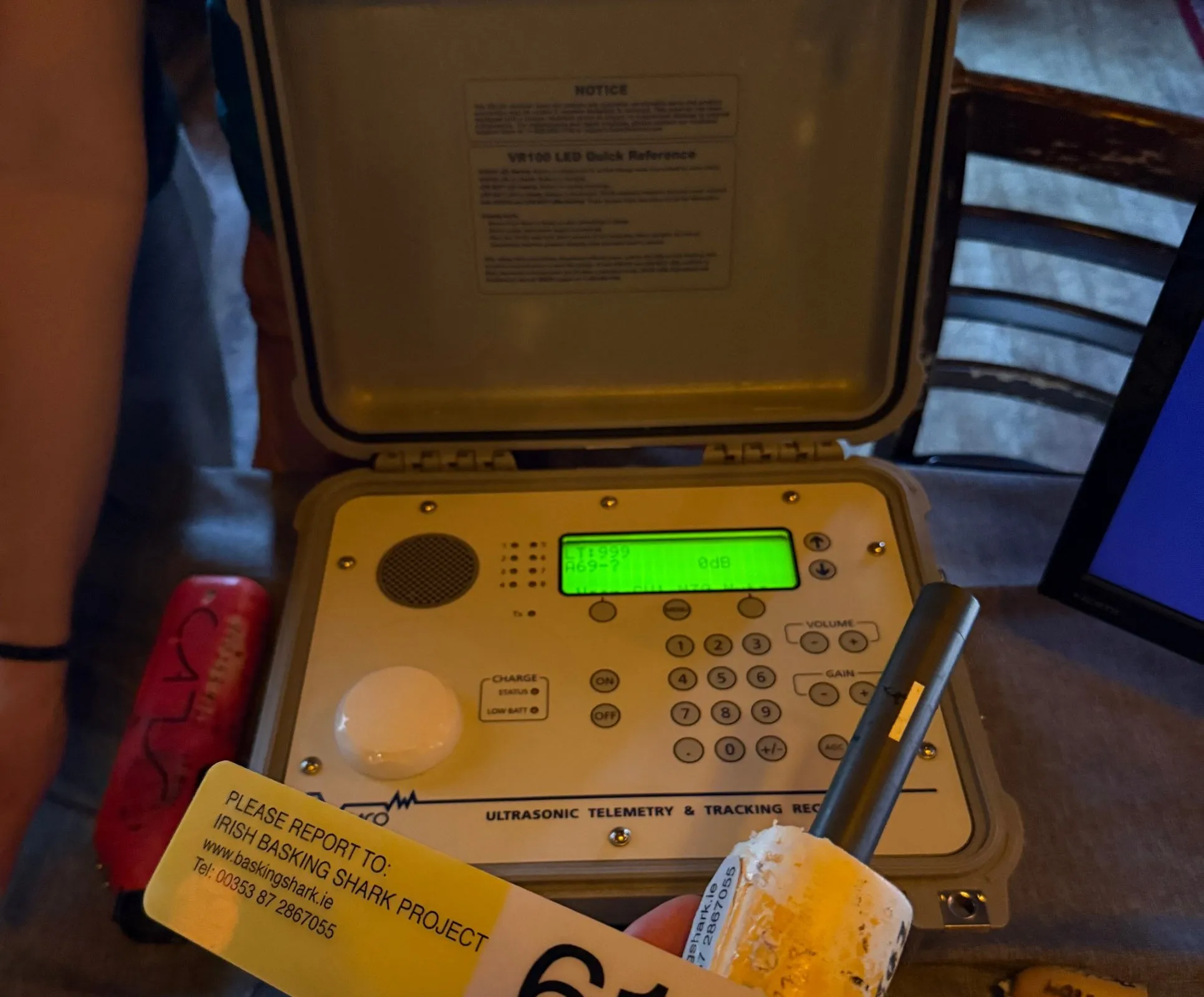
An Innovasea (formerly VEMCO) VR100 receiver in its field case. With a hydrophone over the side of a boat, it listens for tags and decodes each one's ID in real time, so a researcher can follow a shark. It can also talk to receivers moored on the bottom, check their batteries and download their detections without hauling them up. In front of it is a recovered tag from another project, with the number and contact details a finder needs to report it.
Photo: John Sanders

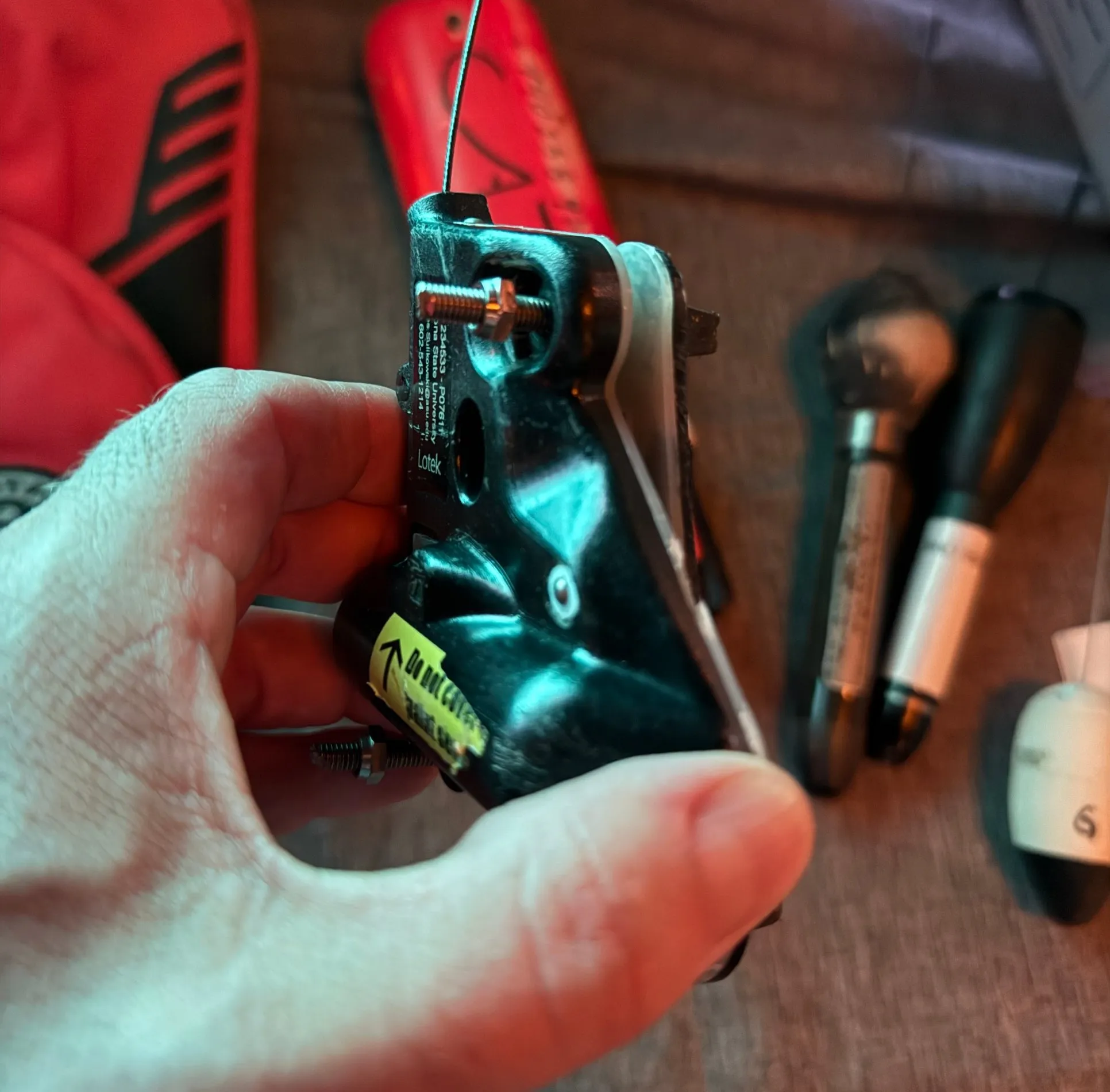
Fin clamp mount
A clamp that bolts a tag package to the dorsal fin so it sits still instead of wobbling on a tether. That matters for tags that measure how the shark itself moves. When the deployment ends, the tag comes off and floats up to be collected.
Photo: John Sanders
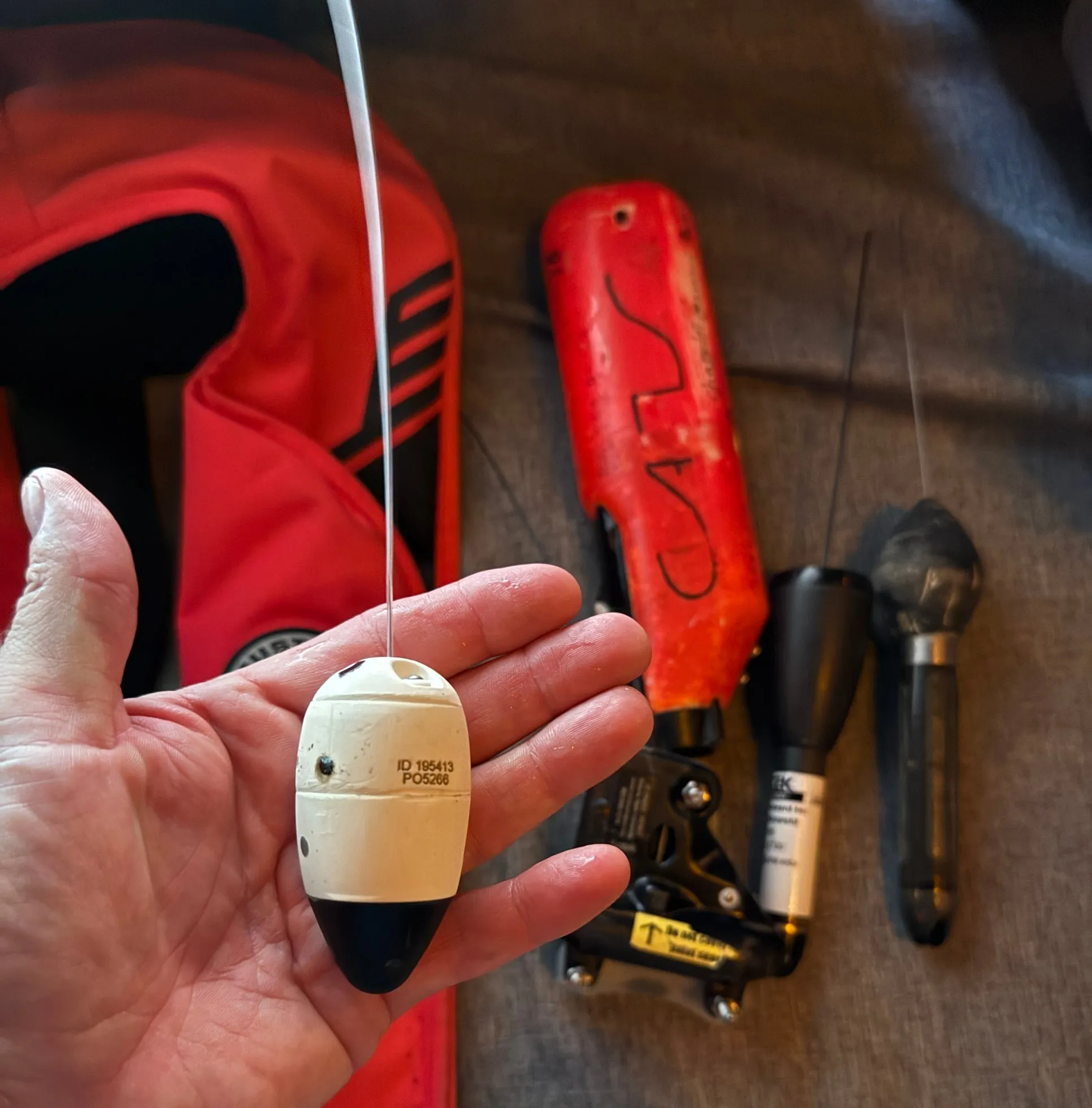
Small float tag
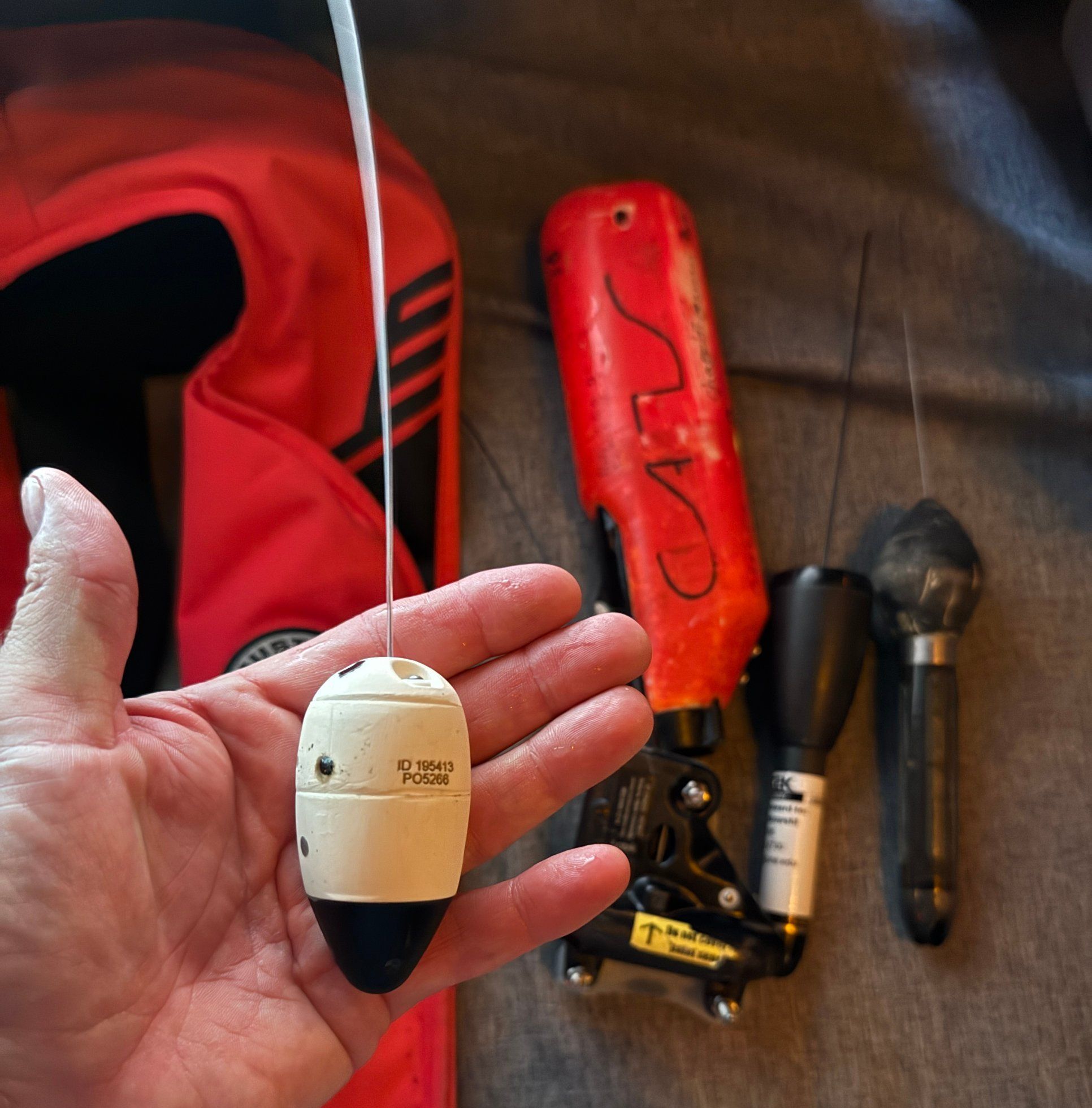
A small foam float with an antenna and a printed ID. Floats like this carry the electronics back to the surface once a tag comes off the shark, where its radio or satellite signal can be picked up and the tag found.
Photo: John Sanders

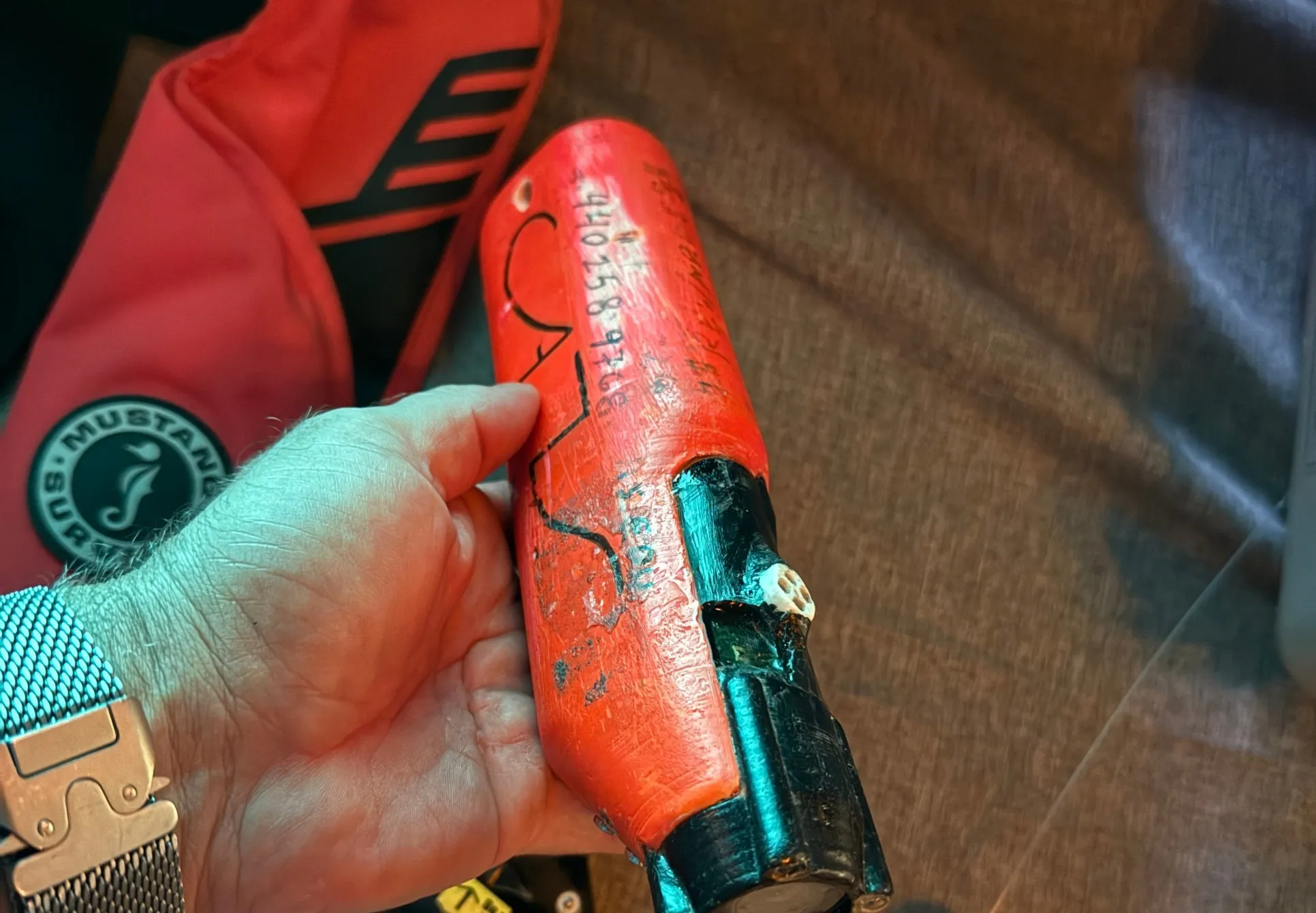
Camera tag
A CATS camera tag: video plus motion, depth and temperature sensors, in a red float. It rides on the fin for hours to days, gives a shark's-eye view of what the animal does, then releases and floats up. The researchers have to recover it to get the video.
Photo: John Sanders
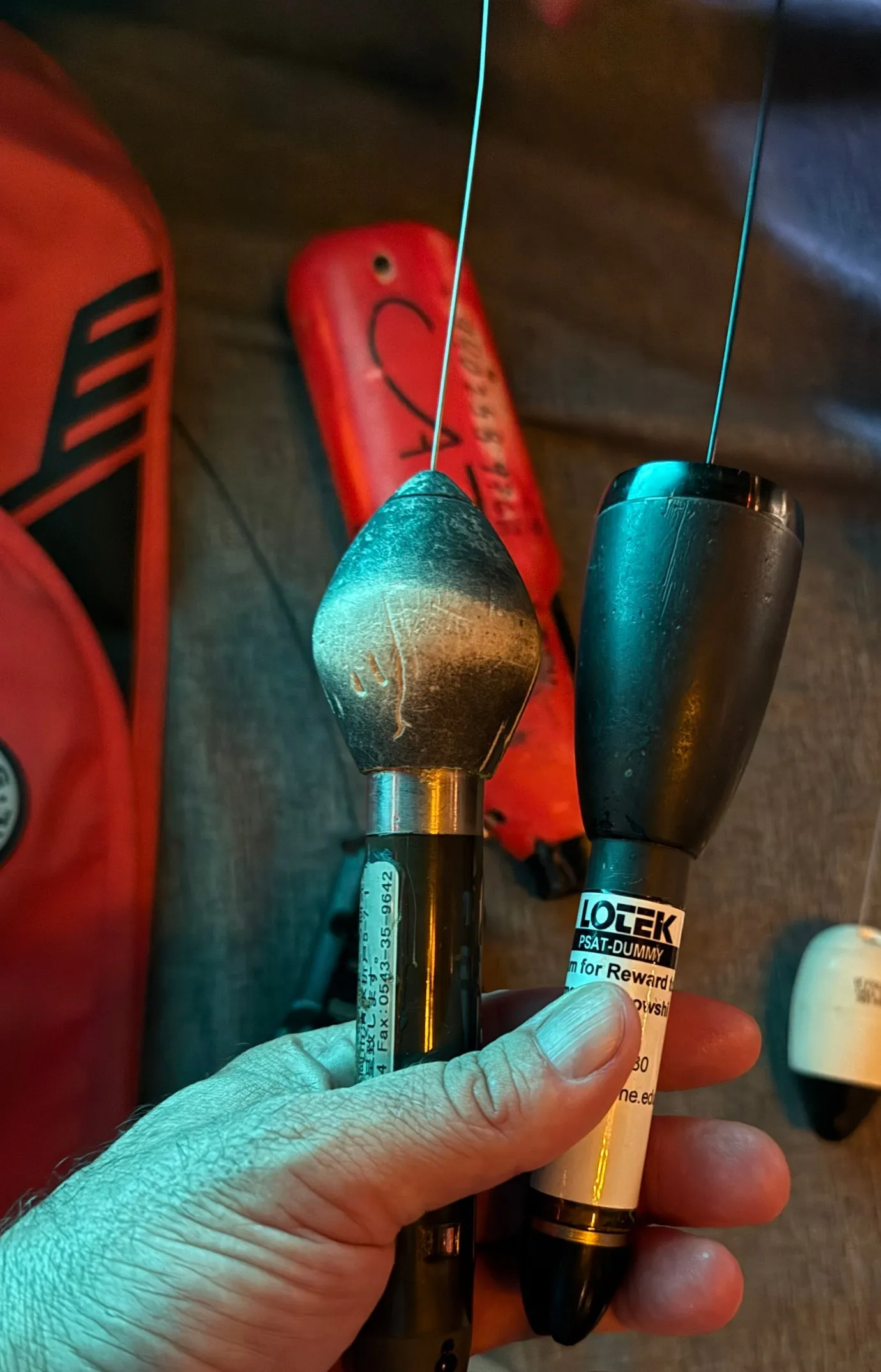
Pop-up satellite tags
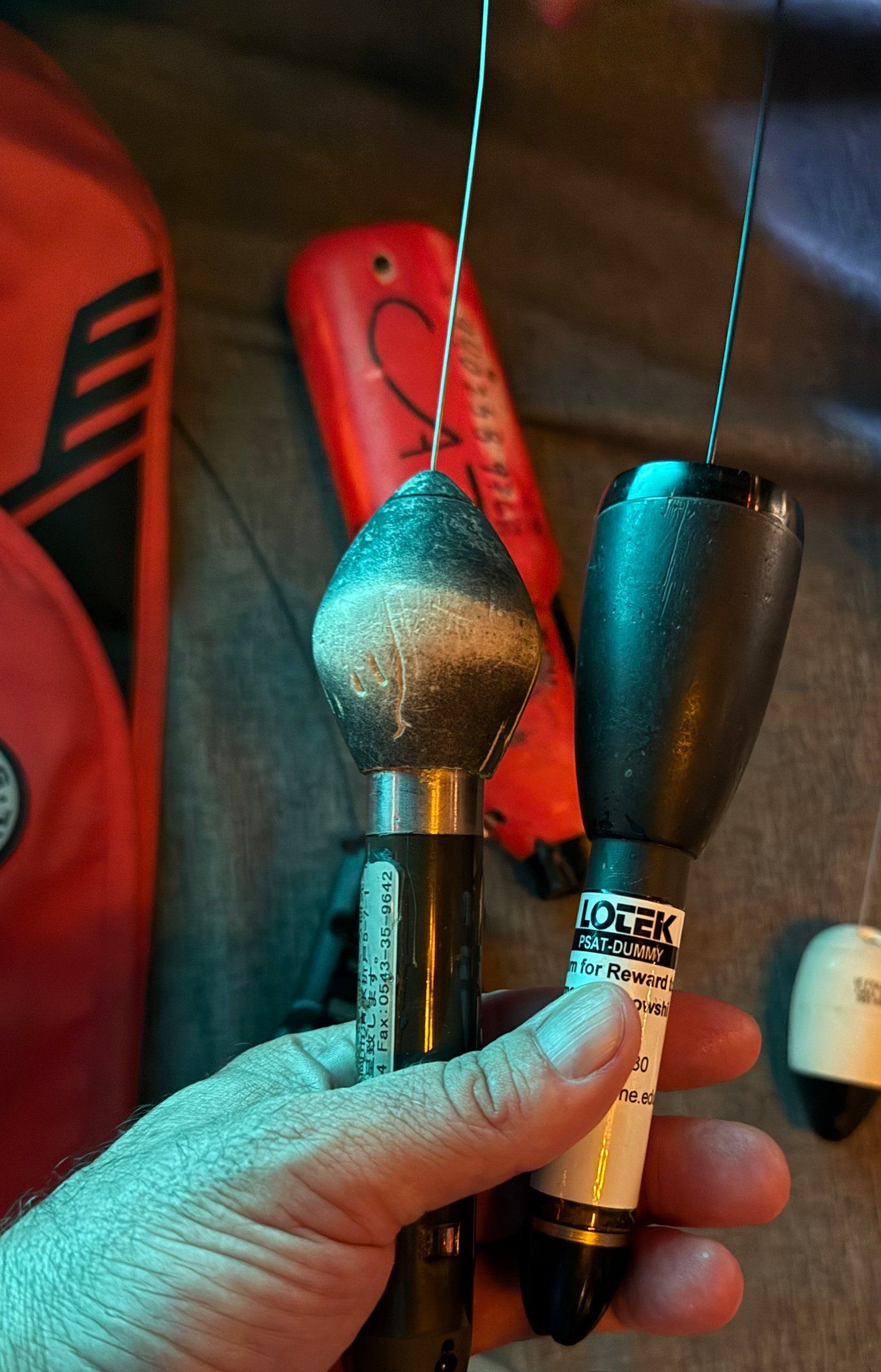
Pop-up satellite archival tags (PSATs). They log depth, temperature and light for months, then release on a set date, float to the surface and send a summary to satellites, so nobody has to find them. The right-hand one is a dummy: same shape and weight, no electronics.
Photo: John Sanders
If you see a tagged shark
- Don't touch the tag or the shark. A tug can pull a tag loose or hurt the animal.
- Film it. Get the tag, its number (Floy tags carry a big one), and both sides of the shark.
- Report the sighting and mention the tag. We'll pass it on to the researchers.
- Found a loose tag on a beach? Most carry a contact or reward label. Use it, or send it to us and we'll find the owner. The data inside may be months of work.
More on tagging in Puget Sound
- Behind the scenes of acoustic tracking in Puget Sound, from the Big Fish Lab
- Meet the Big Fish Lab team at Oregon State University